
Max Weber uses a great German noun Stimmvieh to describe unthinking voting behavior. Literally translated into English, it means “voting cow,” or “voting livestock” which Weber wrote in 1918 or so. At the time, he had this love-hate relationship with the United States, so two of his illustrative examples of “voting cows” both came from there. He saw “voting cows” in both the United States Congress where voting members are herded into party line voting, and in the urban areas of the early twentieth century where ward bosses rounded up recent immigrants to cast votes based on pre-existing ethnic loyalties, rather than the issues involved. …
Category: General Anthropology
“What Makes Something Ethnographic?!” It’s a Good Question to be Asking!
This is a 2012 article about “What Makes Something Ethnographic?” by Carole McGranahan at SavageMinds.com. Somehow it popped up on my Facebook feed this morning. I read it, and recommend the thoughtful musing about the definition of ethnography. It reminds that as the editor of a website called ethnography.com I should be thinking and writing about this subject as well!
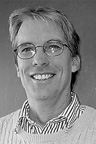
Tony Waters is czar and editor of Ethnography.com.
When is Peer Review the Gold Standard, and When is it Only Tin?
Fair warning from an anonymous peer reviewer on one of my recent articles…
“The author is hampered by an inaccurate, naïve, and highly simplistic understanding of the basic principles…which leads him to make ludicrous statements like the following…”
As is well-known, “peer review” is the gold standard of academic achievement. It is assumed that peer review gives rigor and legitimacy to new ideas. This assumption persists even in the context of well-publicized fraud scandals involving high fliers in physics, human cloning, and cancer research which indicate that peer reviewers at journals like Science and Nature can be as sloppy as anyone else.…
The College Status Game: Why I Think Chico State is a Better University than UC Berkeley
College is not just about learning, it is about status and hierarchy, too. So what do the fine nineteen year-olds at UC Berkeley think about us at low ranked Chico State? And how do we think about the snobs at UC Berkeley? Dismissiveness, preening, and sour grapes are part of the ranking game.
Status is the posturing we do in order to be a member of a desirable group. We posture because status has implications for how valued resources such as money, prestige, power, and honor are distributed.…
My Afternoon as a Social Welfare Case: Treating my Eye Infection in a Thai Hospital
After three months working in Thailand and paying the premium of about $20 per month, I was given my “social insurance card” which entitles me to treatment at one of the local public hospitals. I did not have a chance to do any participant-observer until yesterday though when for the second day I woke up with an eye infection. With diagnoses of Zika Virus dancing my head (put there by my daughter, I might add), I had to make a decision.…
Participant Observation at Its Best: How Max Weber Concluded Nine out of Ten Politicians are Windbags!
It was January 1919, and Max Weber was on a roll in his career as a German politician, journalist, and academic. Germany had on November 11, 1918, more or less surrendered to the Allied forces of France, Britain, Italy and the United States, and Germany slowly began to collapse into an anarchic state. Bavaria sort of seceded under the apologist Kurt Eisner, and set up its own government—this new government was releasing documents from the Bavarian archives so that the Allies meeting at Versailles could better make the case that World War I was indeed started solely by Germany.…

Battle Ritual Among the Nacirema
By Guest Writer Finn Johansson
Battle ritual among the Nacirema
In anthropological and ethnological research, scientists face new cultural specialties every day. Yet there are some rites, so deeply inherited by the practicing community, that ritual behavior might astonish even the most experienced researchers. Accessing those abnormalities from an empirical point of view in order to simplify cross-cultural communication is one of the main tasks of the rite-specified anthropologist. In order to do so, he often has to overcome his own fears and preserve his open-mindedness, even if every civilized muscle of his body wants to escape a situation so far away from what he is used to.…
The Honor Codes and Sins of Academic Administrators and Professors
Max Weber wrote about the nature of both the bureaucracy and politics in his essays. Central to his writings were descriptions of what a administrator actually is, and their reasons, incentives, and habits for doing the things they do. As a professor, of course I work for such administrators—they are the chairs, deans, provosts, and vice presidents who run the California State University. In their job they try to discern what their superiors want—and then carry out that order, regardless of whatever personal opinion they may hold about the goals of the university.In…
What did Nietzsche and Weber Have to Say about Politicians, Vanity, and Stupidity?
Last week I quoted Friedrich Nietzsche (via Bent Flyvbjerg) about power, in a blog “Are There Two Kinds of Stupid?” here at Ethnography.com. Nietzsche (and Flyvbjerg) made the point that “power makes stupid” for the simple reason that people in power come to see themselves as powerful, and therefore usually right and more clever than those around them. Flyvbjerg describes how the process of possessing power means that you can ignore appeals to reason if you wish, because you are powerful.…
Me, the Great Myanmar Earthquake of 2016, Thai Bordellos, and Facebook Tracking
Did you know about the Myanmar Earthquake of April 13, 2016? Neither did I, until I woke up that morning, and saw on Facebook that there was some question if I was ok. My Facebook says (accurately) that I am in Chiangmai, Thailand, which is about 500 miles form Mawfalk, Myanmar where the earthquake occurred. I was of course ok, so clicked the button asking if I was ok And then I clicked my daughter’s FB page saying she was ok because well, FB asked, and I was being dutiful and considerate of our hundreds of FB friends who must have woken up to headlines regarding the earthquake, and then immediately wondered if I was ok.…
Adventures in Thailand V: Car Repairs
I was finishing up my Thai language lesson last week, when my daughter came in the room with a harried look on her face. “The car won’t start, and we need a translator to talk to the people in the parking lot where we are stuck.” Immediate end to my Thai lesson.
The car was stuck in one of Chiangmai’s large mega malls. The uniformed parking lot guard had come over to help, and Kirsten couldn’t figure out what he was saying—though she said that it was apparently helpful.…
Surprises in Thailand IV: Pushing other people’s cars around in the parking lot without asking
We pulled into a big shopping mall here in Chiangmai today on our way to the immigration office. We found a parking place quite quickly which was good, but then I saw something peculiar. Our parking place was a standard issue parallel parking job. But right behind our car was a horizontal parking spot fright behind our car. If someone took that, we could never back out.
Then a woman came near to where she was parked.…